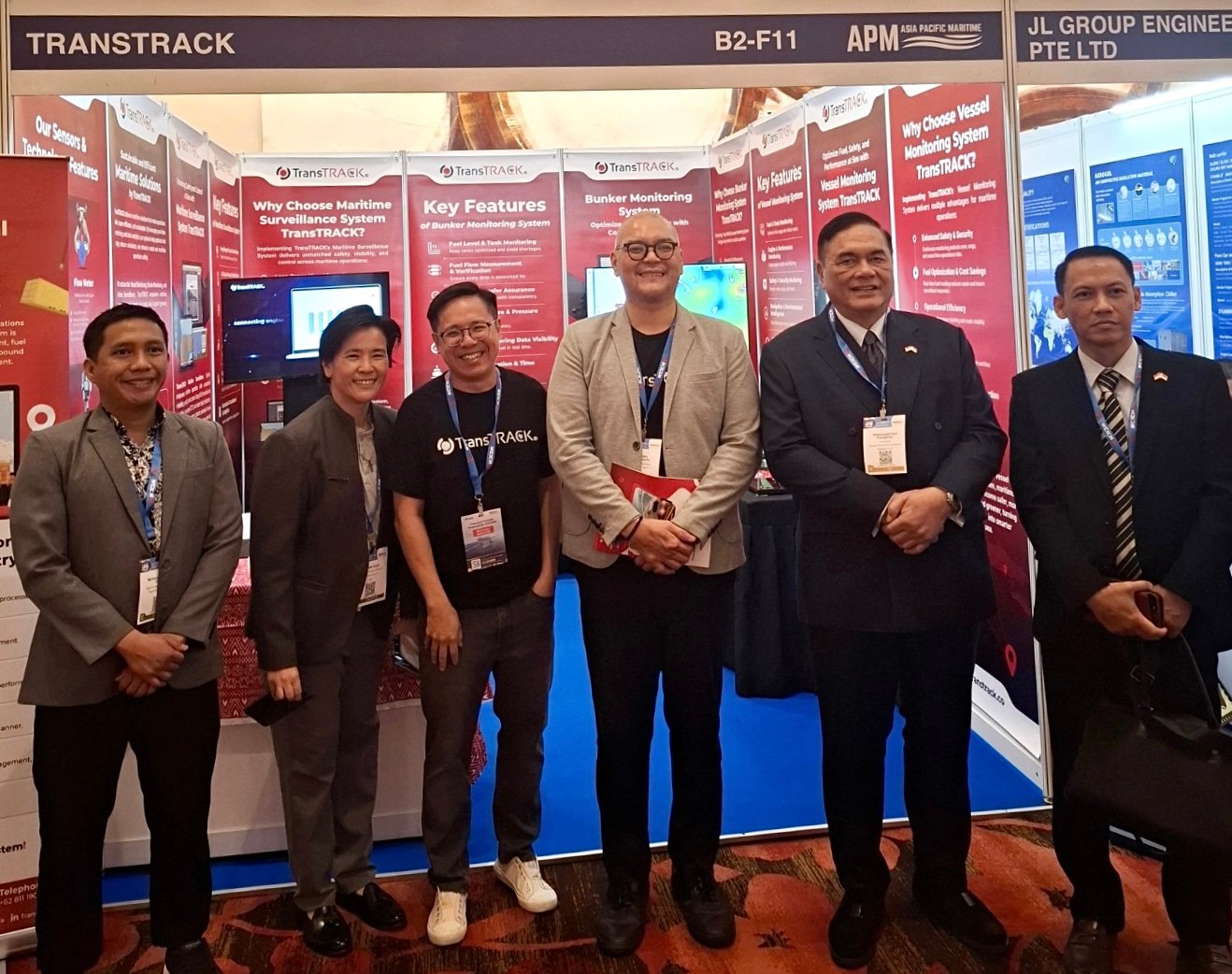
Singapore, March 30, 2026 — Amid increasing demands for efficiency driven by rising fuel prices, also the need for data transparency and regulatory compliance in the maritime sector, TransTRACK, a leading tech enabler focused on optimizing vehicle fleet operations (fleet operation optimizer) and integrating supply chain solutions through advanced technologies powered by the Internet of Things (IoT) and Artificial Intelligence (AI) continues to strengthen its expansion efforts by participating in the Asia Pacific Maritime (APM) international exhibition in Singapore, held from March 25–27, 2026. This presence marks a strategic momentum for TransTRACK to showcase its integrated monitoring technology innovations while reinforcing its position as a pioneer of maritime digital transformation from Indonesia on the global stage.
TransTRACK’s participation at APM also attracted attention from various stakeholders, including a visit from Hotmangaradja Pandjaitan, a representative of the Embassy of the Republic of Indonesia in Singapore, who directly reviewed the technological innovations exhibited at the TransTRACK booth. This visit reflects strong support for homegrown innovations capable of competing at the international level.
As one of the largest maritime exhibitions in the Asia Pacific region, APM serves as a meeting point for industry players, regulators, and technology innovators from various countries. With significant participation and visitor numbers from Indonesia and regional, TransTRACK’s involvement in this event not only expands its international exposure but also strengthens its perception as a competitive, innovative maritime technology company ready to compete globally.
Founder and CEO of TransTRACK, Anggia Meisesari, stated that participation in APM is a strategic step to expand the company’s positioning in the global market. “APM is a highly important platform for us to showcase TransTRACK’s technological capabilities to an international audience. With the strong participation of industry players from Indonesia and regional, we see this as a momentum to strengthen our presence while building trust in the solutions we develop,” she said.
At this event, TransTRACK introduced a new approach to managing maritime operations through a monitoring system designed to address key industry challenges, such as limited real-time visibility, inefficient manual processes, and potential data discrepancies in fuel distribution. Through IoT-based integration, sensors, and cloud technology, TransTRACK delivers a comprehensive digital ecosystem that includes real-time vessel monitoring systems, transparent and accurate fuel distribution monitoring, and port surveillance systems integrated with AIS (Automatic Identification System) and CCTV. This enables all operational data to be consolidated, validated, and accessed in real time through a unified dashboard.
Meanwhile, Aris Pujud Kurniawan, Co-founder and CTO of TransTRACK, explained that this integration enables companies to conduct deeper and more proactive analysis. “For example, when there is a spike in fuel consumption, our system can immediately correlate it with operational factors such as engine RPM or sailing routes, while also providing real-time alerts. This allows operational teams to take corrective actions more quickly, reduce potential waste, and significantly improve efficiency,” he explained.
The implementation of this monitoring system provides added value in terms of accuracy and transparency, helping to minimize potential fraud, enhance operational planning and sustainability, and ensure alignment with industry standards and regulations. With access to historical data and trend analytics, companies can carry out more measurable planning, including engine maintenance scheduling, route optimization, and energy consumption management. This not only improves cost efficiency but also supports emission reduction efforts and the adoption of green technology in maritime operations.
Looking ahead, TransTRACK remains optimistic that digitalization will become the foundation for creating a more efficient, transparent, and sustainable maritime industry, while strengthening Indonesia’s position as a key player in the global maritime ecosystem.